A Folding History: Piretti's 1967 Plia Chair

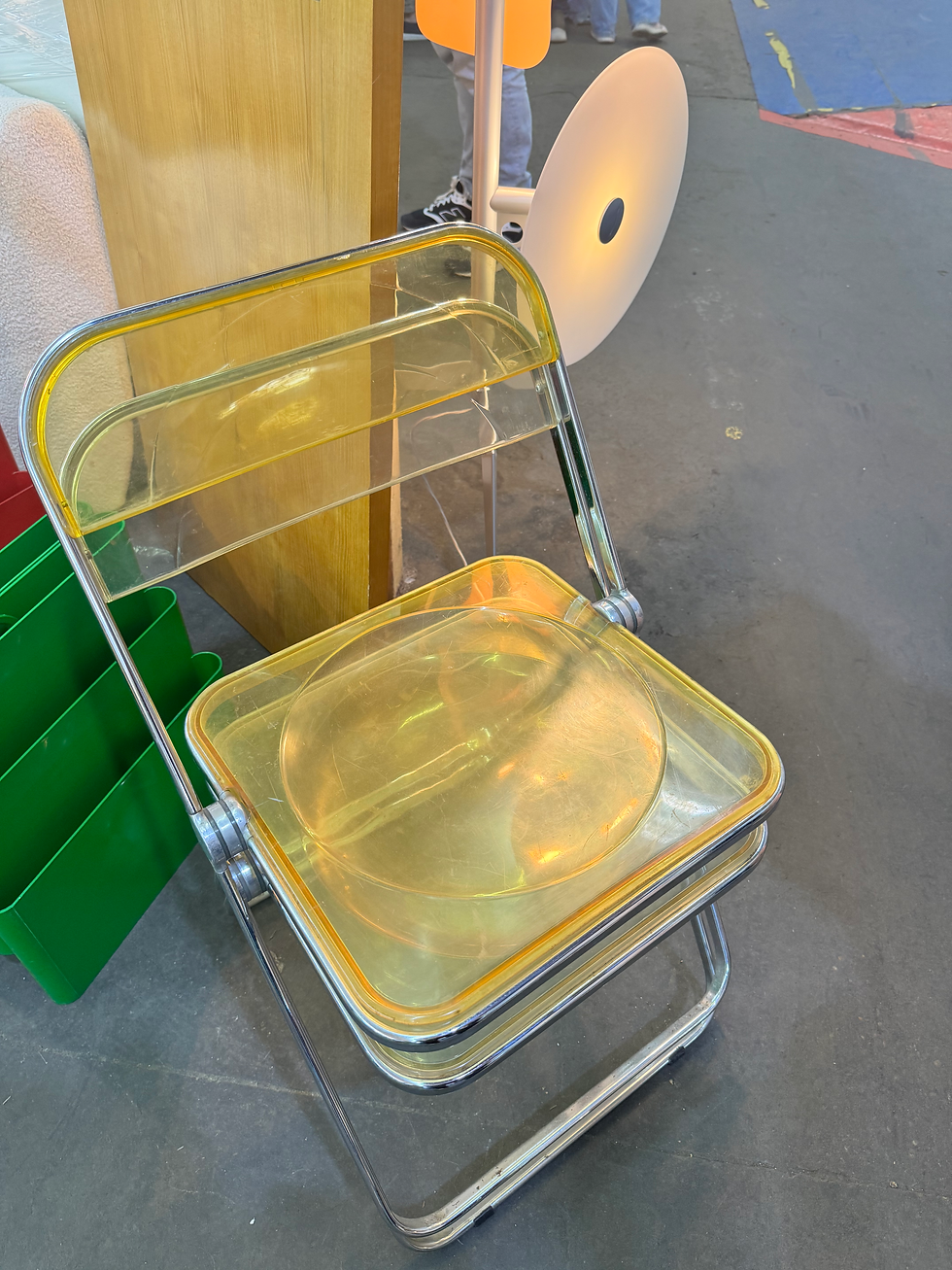
I was recently in Rome with my best friends when we visited an amazing vintage market. Right at the entrance I spotted a set of vintage folding chairs — plexiglass and aluminium, instantly familiar. These were the chairs of my childhood, the ones that came out for family gatherings and Thanksgiving dinners, their appearance signalling that a party was happening. I had to know more.

The Plia Folding and Stacking Chair was designed by Giancarlo Piretti in 1967 for Bologna manufacturer Anonima Castelli. It has sold over seven million units and is still in production today (both the original and countless copies!). The design story is a good one: a chair that folds to less than 5cm thick, with a die-cast aluminium joint at the centre doing all the structural work, and a seat and back of moulded transparent polycarbonate that seem almost to disappear. The transparent body is a brilliant choice — not cheap-looking but almost architectural, allowing the chair to occupy a space without visually cluttering it. Even the folding mechanism is beautiful: the three-disc hinge that reduces the chair to five centimetres was considered an engineering stroke of genius at the time, and it still looks like one.
In 1972, just five years after launch, MoMA acquired two Plia chairs — a gift from the manufacturer — for their Architecture and Design collection. MoMA's design collection is one of the most selective in the world, existing to argue that certain objects are works of art. The Plia earned its place as a symbol of democratic design: mass produced, sold widely, priced for ordinary life — and still considered worthy of a museum. That tension is exactly why I love design history. A single object can capture its moment so completely. The Plia is postwar modernism from its form to its materials: utility, technology and beauty, all in one.
While perfect for occasional use, I also love spotting Plia chairs living permanently in beautiful spaces — proof that a folding chair can be more than practical.




Comments